
Is your Brand Worthy?
BARREL AMBASSADORS PARTNERSHIP WITH CANARD DUCHENE
BARREL AMBASSADORS
❋
YOUR GATEWAY TO AFRICA
❋
EXPAND YOUR FOOTPRINTS
❋
BARREL AMBASSADORS ❋ YOUR GATEWAY TO AFRICA ❋ EXPAND YOUR FOOTPRINTS ❋

Our Portfolio - Champagne
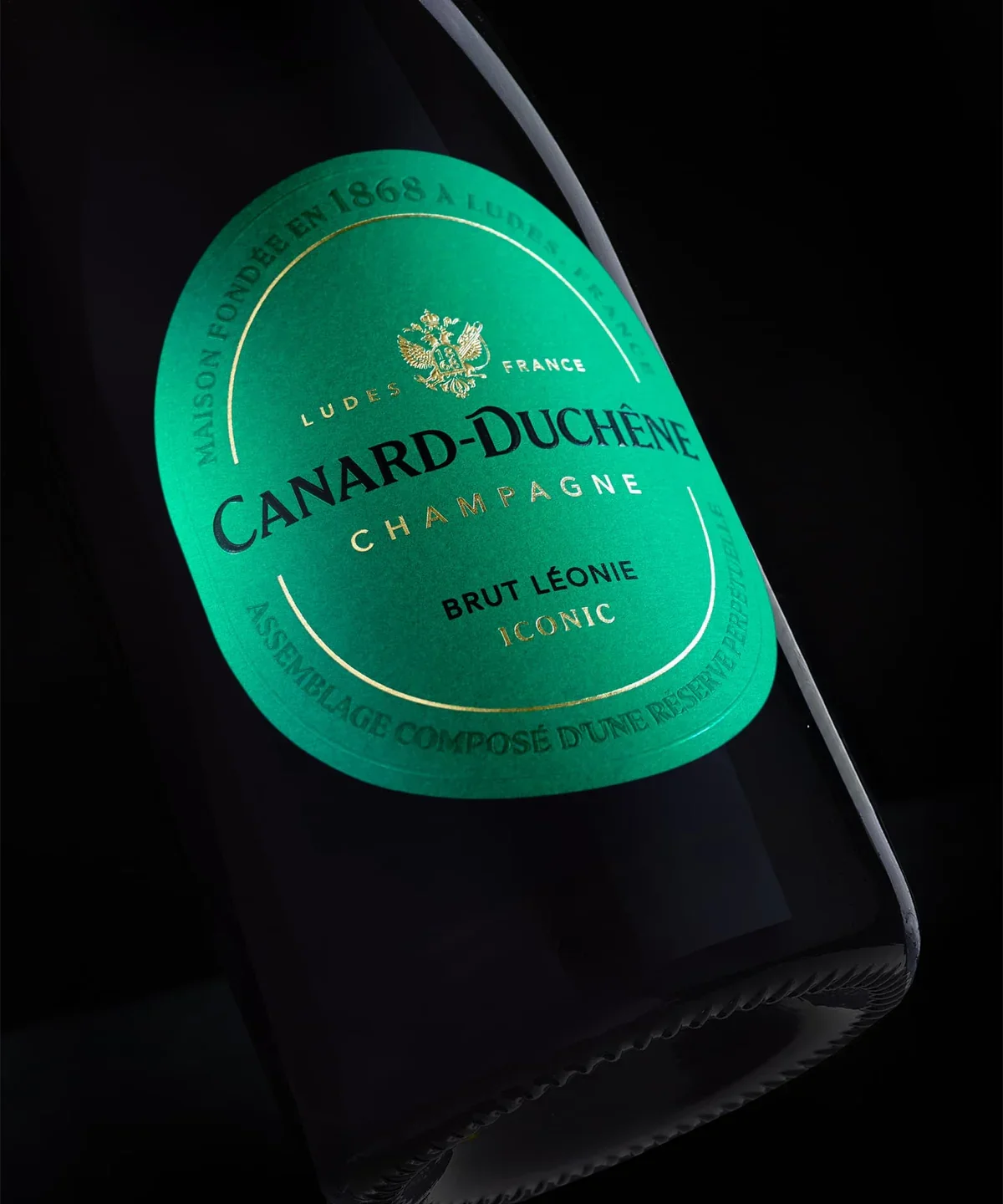
BRUT CHAMPAGNE
It is one of the most popular categories of champagne worldwide. Loved for its perfect balance between freshness and aromatic complexity, it appeals to both enthusiasts and seasoned connoisseurs. But what makes it so special? Why is it so versatile when it comes to food pairings? Discover everything you need to know about it, its unique characteristics, ideal food pairings, and how to choose the best one.
What is Brut Champagne?
Definition and Key Features
In Champagne, the term "Brut" refers to the residual sugar level added at the final stage of winemaking, known as dosage. This sugar, called "liqueur de dosage," balances the wine’s natural acidity while enhancing its subtle aromas.
What is the dosage for a Brut Champagne?
Experts classify a champagne as Brut when it contains between 6 and 12 grams of sugar per liter. This low dosage helps maintain the wine’s natural freshness while showcasing the grape variety's flavors. Thanks to this balance, many people recognize Brut Champagne for its lively yet well-rounded profile, which offers a rich aromatic palette.
At Canard-Duchêne, our Cellar Master ensures that most of our cuvées, which are Brut Champagnes with a dosage below 7 g/L, fully express the natural aromas of our expertlycrafted blends.
Brut vs. Extra-Brut Champagne: What’s the Difference?
Brut Champagne: Dosage between 6 and 12 g/L, offering a perfect balance between acidity and roundness.
Extra-Brut Champagne: Dosage below 6 g/L, emphasizing the wine's aromatic complexity and natural structure.
Brut vs.Demi-Sec Champagne: What’s the Difference?
Brut Champagne: 6 to 12 g/L of sugar, dry and well-balanced.
Demi-Sec Champagne: 32 to 50 g/L of sugar, sweeter and ideal for desserts.
Why Choose Brut Champagne?
Versatile for Any Occasion
Brut Champagne is highly versatile, making it an excellent choice for various occasions and food pairings. It is perfect as an aperitif, but also pairs beautifully with seafood, fish, and even white meats. Its fresh and well-balanced profile makes it a top pick for meals and celebrations.
A Favorite Among Wine Lovers
With its low sugar content, it allows the grape varieties (Chardonnay, Pinot Noir, Meunier) to shine while reflecting the authenticity of the Champagne terroir. Its balance of freshness and complexity makes it a preferred choice for both beginners and seasoned wine enthusiasts.
Aging Potential and Longevity
A high-quality Brut Champagne can age in the cellar for several years. Over time, its aromas evolve into more complex notes such as dried fruits, honey, and toasted bread, offering a unique tasting experience.
How to Choose the Best Brut Champagne?
To select the ideal Brut Champagne, consider the following:
Grape Composition:
A Chardonnay-dominant blend (Blanc de Blancs) will be fresher and more mineral.
A blend with more Pinot Noir or Meunier (Blanc de Noirs) will be more structured and fruity.
Vintage vs. Non-Vintage:
Non-vintage Brut offers consistency and the house's signature style.
Vintage Brut comes from a single exceptional year, providing a unique character.
House Style:
Each Champagne house has its own distinct style. At Canard-Duchêne, we craft our Brut Champagnes with a focus on freshness, fruitiness, and perfect balance.
Brut Champagne & Food Pairings: What to Serve It With?
Thanks to its vibrant freshness and refined aromas, it pairs beautifully with a wide range of dishes. Here are some ideal pairings:
Seafood & Shellfish: Oysters, shrimp, and scallop carpaccio.
Fish: Smoked salmon, sushi, ceviche.
White Meats: Roast chicken, veal fillet.
Cheese: Aged Parmesan, Comté, Brie de Meaux.
Spicy Dishes: Asian cuisine (sushi, sashimi), lightly spiced dishes.
Fine Charcuterie: Parma ham, high-quality dry sausage.
FAQ: Everything You Need to Know About Brut Champagne
Can Brut Champagne be stored for a long time?
You can enjoy Non-Vintage Brut (NV) upon release, but you can store it for 2 to 3 years (sometimes up to 5 years) in a dark, temperature-controlled environment (10-15°C).
Vintage Brut has a higher aging potential and can develop even more complexity over 10 years or more.
Serving Tips: How to Enjoy Brut Champagne at Its Best
For the ultimate tasting experience, serve Brut Champagne at 8 to 10°C (46-50°F). Use large flutes or wine glasses to allow the aromas to fully develop.
Conclusion: The Timeless Elegance of Brut Champagne
Brut Champagne remains a must-have for sparkling wine enthusiasts. Its low sugar content, combined with its freshness and refined complexity, makes it a versatile choice for various food pairings and celebrations.
To select the best Brut Champagne, consider its blend, vintage, and personal aroma preferences. Whether for a special occasion, a fine dining experience, or simply for the pleasure of tasting, Brut Champagne is a timeless classic.
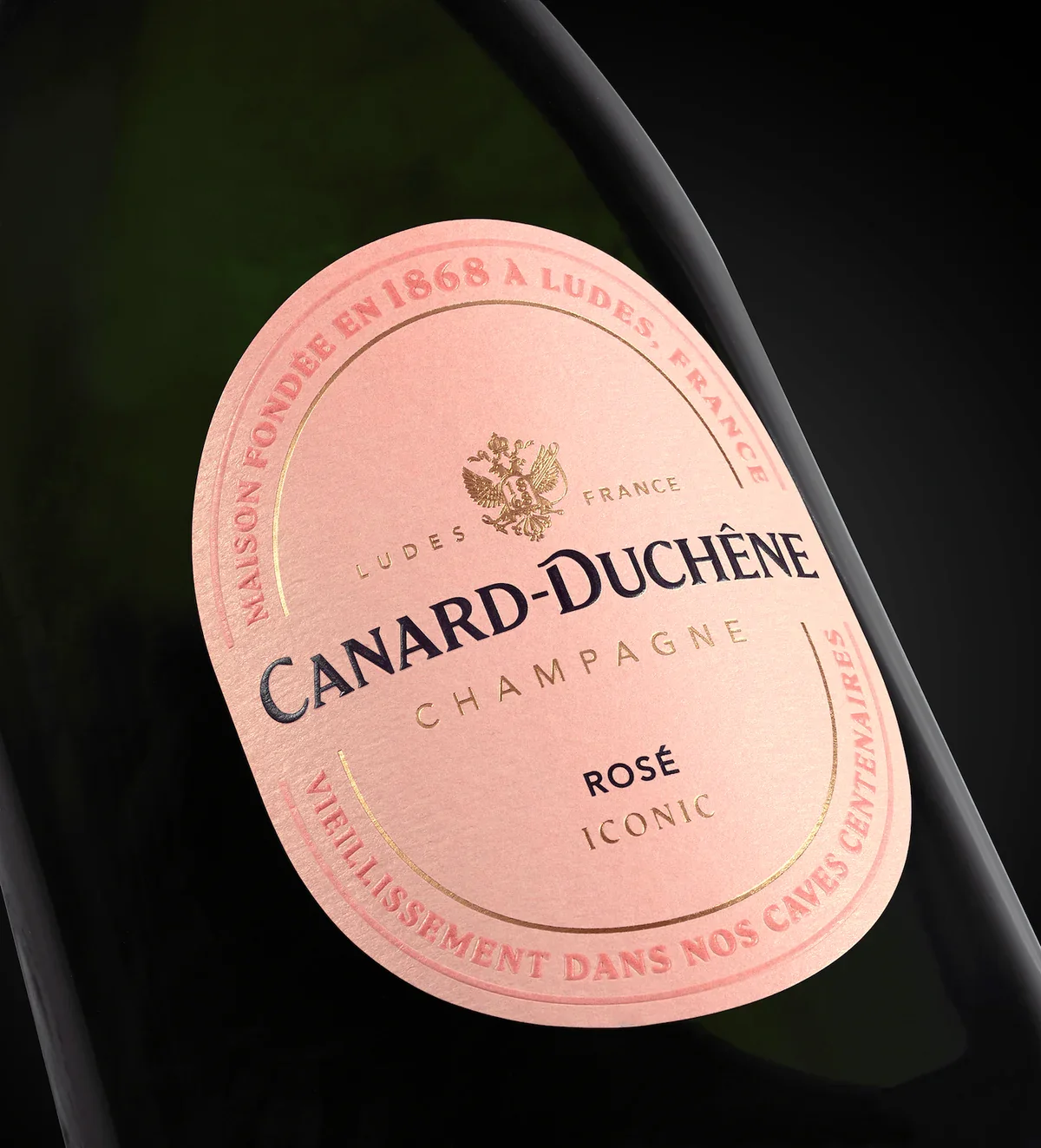
ROSE CHAMPAGNE
Rosé Champagne stands out for its elegant color and expressive fruit profile. Highly sought after for celebratory moments - such as weddings or ceremonies - it also shines at the table, enhancing a wide range of food pairings. Different production methods impart a diverse aromatic palette, making each Rosé Champagne unique.
Types of Rosé Champagne: Definition & Characteristics
There are two primary types of Rosé Champagne:
Rosé d’Assemblage (Blended Rosé Champagne)
This is the most common method. Rosé d’Assemblage is produced by adding a proportion of red
wine from Champagne (typically 5–20%) to the final blend.
This technique allows for precise control over color and aromatic profile, ensuring consistency in each cuvée. Rosé d’Assemblage is known for its freshness, lightness, and vibrant fruit notes (strawberries, raspberries, cherries) with a refined acidity. It represents the majority of Rosé Champagnes available on the market today.
Rosé de Saignée (Maceration Rosé Champagne)
A rarer and more traditional technique, Rosé de Saignée (or Maceration Rosé) is crafted by allowing the black grape skins (Pinot Noir and/or Meunier) to macerate with the juice for a short period. This natural extraction process enhances both the color and aromatic intensity of the wine, resulting in a more structured, complex, and deeply colored Rosé Champagne. It is often richer on the palate, offering deeper red fruit flavors and greater aging potential.
How to Choose the Perfect Rosé Champagne?
To select the ideal Rosé Champagne, consider the following:
Grape Composition:
A higher proportion of Pinot Noir and/or Meunier enhances roundness and fruitiness.
A blend incorporating Chardonnay brings finesse and freshness.
Vinification Method:
The blended method produces a lighter, fruit-forward style.
The maceration method results in a richer, more expressive champagne.
Champagne House Signature:
Each Champagne House has its distinctive style. At Canard-Duchêne, we craft Rosé Champagnes that embody freshness, fruit purity, and perfect balance.
Rosé Champagne at Canard-Duchêne
At Canard-Duchêne, we employ both winemaking methods to offer two distinct Rosé Champagnes with unique personalities:
Rosé Essentiel – A Rosé d’Assemblage, elegantly blending Pinot Noir, Meunier, and Chardonnay. This refined cuvée reveals gourmet red fruit notes, striking a perfect balance between freshness and fruitiness, reflecting the house’s signature style.
Rosé Iconic – A Rosé de Saignée, expressive and captivating. Its deep color and aromatic intensity stem from the careful maceration of Pinot Noir grapes, delivering a vibrant profile with crisp, elegant red fruit flavors. Designed for gastronomy, this exceptional champagne pairs beautifully with refined dishes.
How to Enjoy Rosé Champagne?
Rosé Champagne is best enjoyed at a serving temperature of 8 to 10°C (46–50°F).
It pairs exquisitely with:
Salmon and seafood dishes
Fresh red berries and fruit-based desserts
Soft cheeses like Brie and Chaource
Aging & Storage: Can Rosé Champagne Be Aged?
Non-vintage Rosé Champagnes are crafted for immediate enjoyment but can be cellared for 2–3 years (sometimes up to 5 years) in optimal conditions: away from light, at a stable temperature of 10–15°C (50–59°F).
Vintage Rosé Champagnes have greater aging potential and can evolve beautifully over 10 years or more, developing enhanced complexity and depth.
Conclusion: The Elegance of Rosé Champagne
Rosé Champagne is a refined and versatile expression of Champagne’s artistry, offering a broad spectrum of flavors shaped by different winemaking techniques. Whether as an aperitif or a gastronomic companion, it always brings a touch of elegance and indulgence to any occasion.
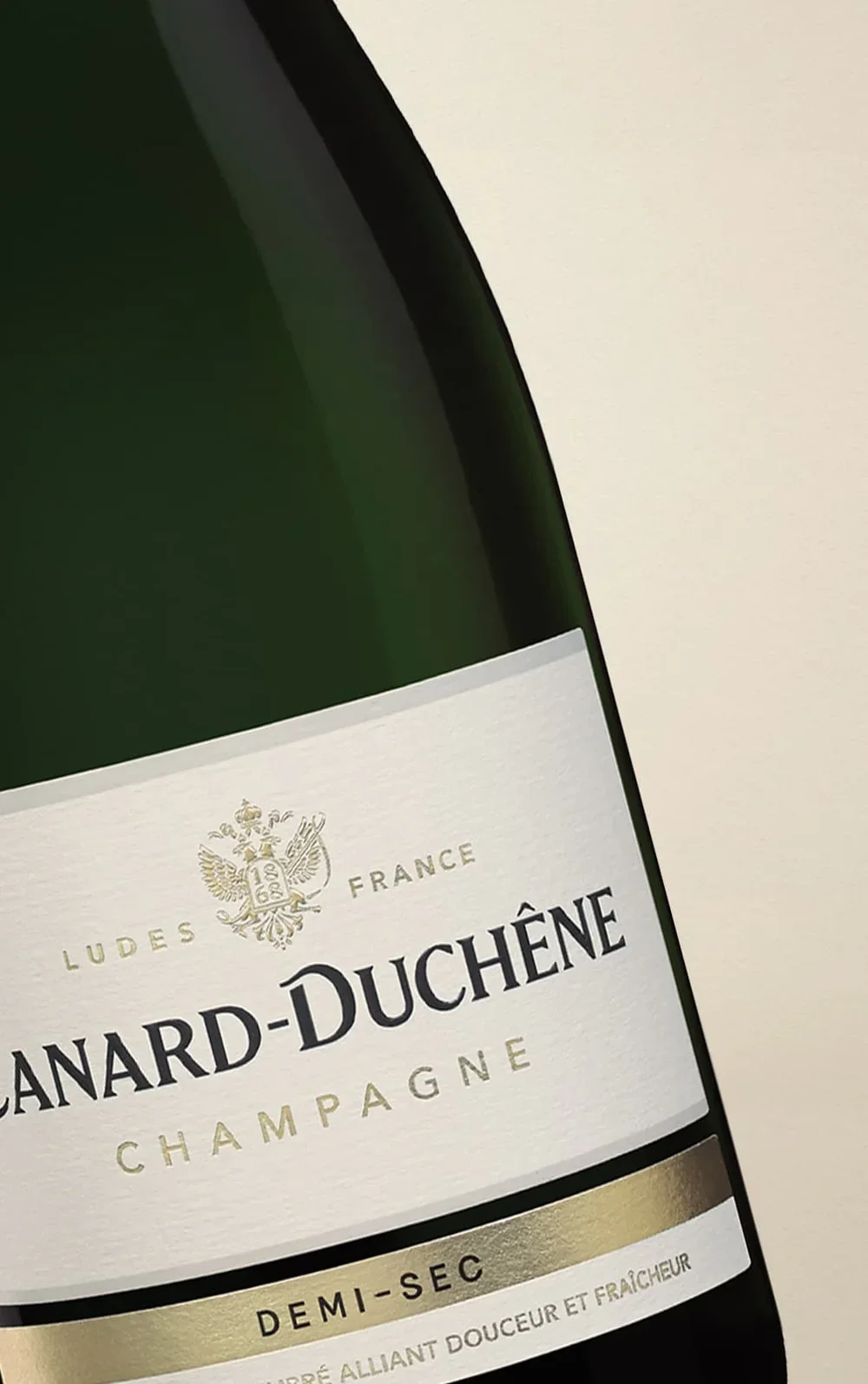
DEMI SEC CHAMPAGNE
Crafted using the traditional Champagne method, Demi-Sec Champagne is distinguished primarily by its higher sugar dosage, positioning it between Sec and Doux on the Champagne classification scale.
What is Demi-Sec Champagne?
Definition & Characteristics
A Champagne is classified as Demi-Sec when its residual sugar content ranges between 32 and 50 grams per liter. This higher dosage imparts a smoother, rounder texture compared to Brut or Extra-Brut Champagnes.
The dosage adjustment occurs during the addition of the liqueur d’expédition after disgorgement, a key step in Champagne production.
For an in-depth understanding of dosage, visit our article: Everything You Need to Know About Champagne Dosage.
Demi-Sec Champagne is appreciated for its subtle balance between acidity and sweetness, offering a rich, indulgent aromatic profile.
Our Canard-Duchêne Essentiel Demi-Sec reveals ripe yellow fruit aromas with a hint of compote, promising a silky, generous mouthfeel. On the palate, peach-driven intensity blends with warm spice notes, creating a soft and velvety sensation.
Food Pairings: The Perfect Companion for Desserts & Spiced Dishes
The smooth texture of Demi-Sec Champagne makes it an ideal pairing for sweet or spicy dishes.
It pairs beautifully with refined desserts, such as:
_ Fruit tarts
_ Crème brûlée
_ Almond and honey-based pastries
It also complements lightly spiced exotic dishes, such as:
_ Thai cuisine
_ Indian dishes
The contrast between the Champagne’s sweetness and the spice creates a harmonious balance on the palate.
Differences Between Brut & Demi-Sec Champagne
One of the key distinctions between Brut and Demi-Sec Champagne is their sugar content.
Brut Champagne contains 6 to 12 g/L of sugar, making it crisp and refreshing—perfect for apéritifs and main courses.
Demi-Sec Champagne has a higher sugar dosage (32-50 g/L), offering a smoother, more approachable profile—ideal for gourmet moments and dessert pairings.
How & When to Enjoy Demi-Sec Champagne?
Ideal Serving Conditions:
_ Temperature: Serve between 8 and 10°C to preserve its freshness while enhancing
its sweet aromas._ Glassware: A wider flute or a white wine
glass allows better aeration and aroma expression.
Who Will Enjoy Demi-Sec Champagne?
Demi-Sec Champagne is perfect for those seeking a softer alternative to Brut, while still enjoying the elegance and effervescence of fine Champagne.
Can Demi-Sec Champagne Be Aged?
Demi-Sec Champagnes are ready to be enjoyed upon release. However, depending on personal preference, they can be cellared for 2 to 3 years (or up to 5 years) in a dark, temperature-stable environment (10°C to 15°C).
Conclusion: The Indulgence of Demi-Sec Champagne
Demi-Sec Champagne is a delightful discovery for lovers of gourmet sparkling wines. Its balance of sweetness and freshness, generous aromatic complexity, and ability to enhance desserts and spicy dishes make it a truly exceptional Champagne.
Explore Canard-Duchêne’s Exceptional Cuvées
If you appreciate the indulgence and freshness of Demi-Sec Champagne, discover our other prestigious cuvées:
_ Blanc de Blancs Iconic – A showcase of elegance and minerality.
_ Blanc de Noirs Iconic – An expression of bold, fruit-driven intensity.
_ Brut & Rosé Essentiel – Perfect for those who seek refinement and vibrant fruit notes
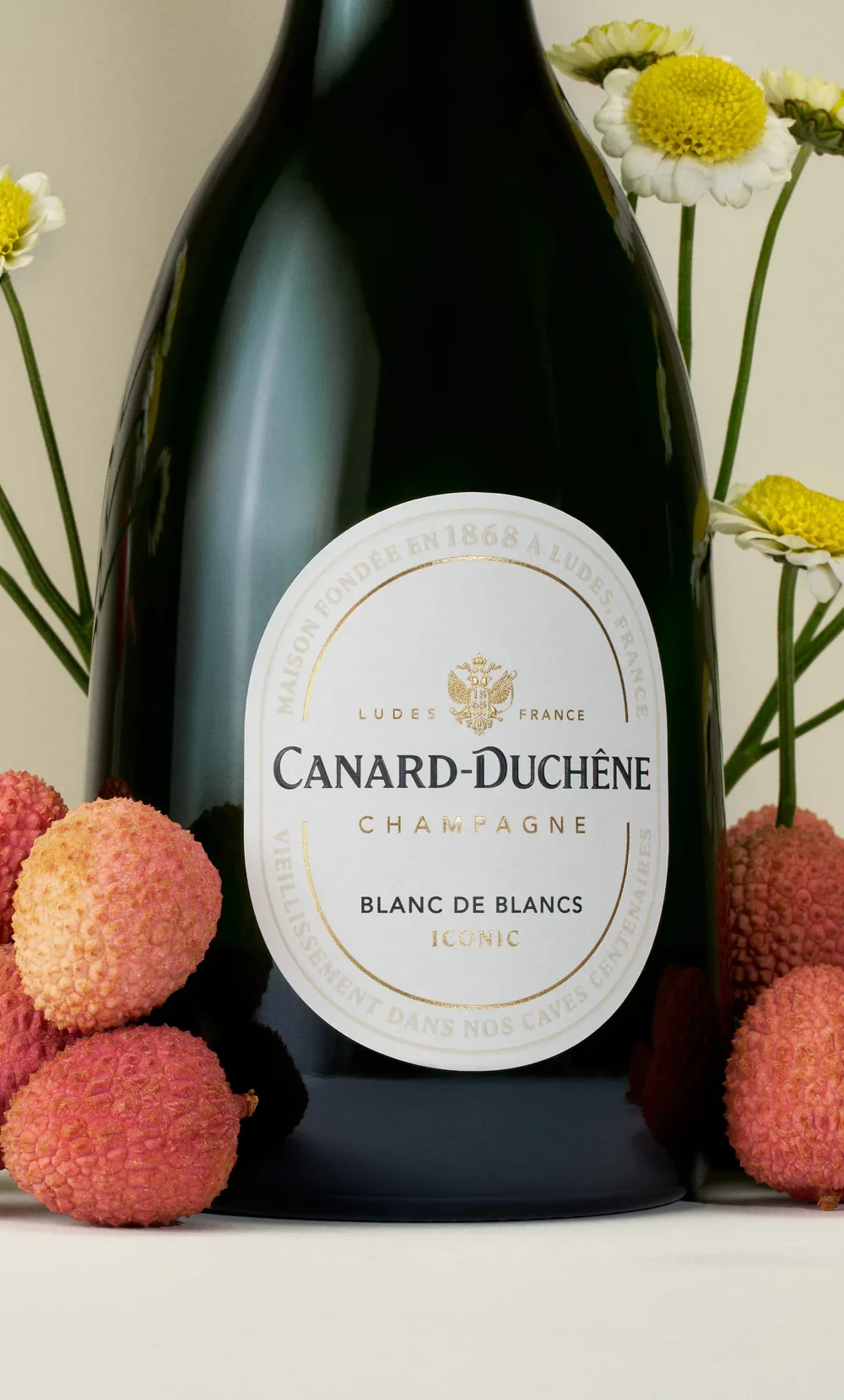
BLANC DE BLANCS CHAMPAGNE
Blanc de Blancs Champagne is an exceptional cuvée, highly regarded by sparkling wine enthusiasts for its finesse and elegance. Made only from white-skinned, white-fleshed grapes, mainly Chardonnay, it is known for its freshness, light aromas, and smooth structure.
What is Blanc de Blancs Champagne? Definition & Characteristics
Blanc de Blancs Champagne has a long history. It became well-known over the years, especially in the Côte des Blancs region. This area is south of Épernay and is famous for its great Chardonnay grapes.
This region's chalky soils play a crucial role in the aromatic expression and minerality of Blanc de Blancs. The chalky soil helps control temperature and water. This supports the best grape ripeness and keeps the fruit's natural acidity.
Canard-Duchêne is based in the Montagne de Reims, the home of Pinot Noir. Since 1943, they have made Blanc de Blancs cuvées. They offer their own interpretation of a 100% Chardonnay champagne.
Difference between Blanc de Blancs and Blanc de Noirs
Champagne Blanc de Blancs and Blanc de Noirs differ primarily in the grape varieties used in their production. A Blanc de Blancs champagne is made exclusively from white grapes, typically Chardonnay, resulting in a wine that is elegant, fresh, and delicately floral. In contrast, a Blanc de Noirs champagne is crafted solely from black-skinned grapes with white juice, mainly Pinot Noir and/or Pinot Meunier, which gives it a richer, more structured, and fruit-forward character. This fundamental difference influences not only the flavor profile but also the mouthfeel and aging potential of the champagne. Understanding the distinction between Blanc de Blancs and Blanc de Noirs helps in selecting the perfect champagne for any occasion or food pairing.
Blanc de Blancs Champagne Characteristics
To be called Blanc de Blancs, which means "white Champagne made from white grapes," the Champagne must come only from white grapes. These grapes are Chardonnay.
Specificities of Blanc de Blancs Champagne
To the tasting, each Blanc de Blancs cuvée carries a unique identity influenced by both terroir and vinification choices:
_ Aromas & Structure: Fresh notes of lychee and pear, accompanied by creamy pastry nuances.
_ Minerality & Brilliance: The chalky soil composition imparts an elegant minerality and freshness.
_ Aging & Complexity: When they are young, they show bright and fresh flavors. Over time, they
change and develop richer aromas of dried fruits, honey, and roasted notes.
What to Pair with Blanc de Blancs Champagne?
As a gastronomic Champagne, Blanc de Blancs Champagne is highly versatile and pairs perfectly with:
_ Seafood & Fish: Oysters, sashimi, white fish.
_ Refined Dishes: Scallop carpaccio, white truffle risotto.
_ Aged Cheeses: Such as Comté, for a bold and sophisticated pairing.
_ Elegant Aperitifs: The perfect start to a meal, showcasing refinement.
Why Choose Blanc de Blancs Champagne?
Choosing Blanc de Blancs Champagne means selecting the purity and elegance of Chardonnay in its finest expression. Its carefully selected origins, meticulous production, and aging potential make it an essential choice for Champagne enthusiasts seeking freshness and refinement.
Can Blanc de Blancs Champagne Be Aged?
Aging plays a vital role in the evolution of Blanc de Blancs. Some young Blanc de Blancs Champagnes show the fresh and lively taste of Chardonnay. Cuvées that age longer develop richer and more complex aromas. These can include dried fruits, honey, and sometimes toasted notes.
Typically, Blanc de Blancs Champagnes are ready to be enjoyed immediately upon release. You can store them for 2 to 3 years, or even up to 5 years. Keep them in a dark place with a temperature between 10°C and 15°C. Vintage Blanc de Blancs cuvées have a greater aging potential and can age for 10 years or more in the cellar.
Explore Other Exceptional Canard-Duchêne Cuvées
If Blanc de Blancs Iconic impresses you with its freshness and elegance, check out the other great cuvées from Canard-Duchêne:
_ Blanc de Noirs Iconic – Delighting with its intensity and aromatic richness.
_ Millésimé Collections – Revealing the complexity of exceptional vintages.
_ Brut & Rosé Essentiel – Merging finesse and generosity for unique moments.